
Why Do 2D Imager Scanners Outperform Laser Scanners on Damaged Labels
13th Mar 2026
Modern imaging devices outperform legacy beam-based models on damaged labels because they function like advanced digital cameras rather than relying on a single beam of reflected light. By capturing a complete picture of the symbol, these advanced optical tools use sophisticated error-correction algorithms to mathematically reconstruct missing, smudged, or distorted data instantly.
In life science laboratories and high-throughput diagnostic facilities, a single misread compromises research and sample tracking. Upgrading scanning hardware is a critical step for modern scientific workflows to ensure total data accuracy.
The Anatomy of a Damaged Label in Demanding Environments
In a pristine warehouse, a linear label might survive indefinitely. However, in life science settings, labels are subjected to extreme stress that degrades print quality.
- Cryogenic Freezing and Frost: Vials stored in ultra-low temperature freezers accumulate frost, which acts as a prism, scattering light from older scanners.
- Chemical Exposure: Spills from solvents or sterilization agents quickly smear the ink on standard thermal transfer labels.
- Physical Abrasion: Repeated handling in and out of dense SBS-formatted racks causes labels to tear, scratch, or peel over time.
- Curved Surfaces: Microcentrifuge tubes have tightly curved surfaces that severely distort a straight line of light.
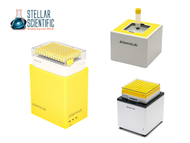
To combat these realities, facilities are increasingly adopting the AlteRead Standalone Single Tube 1D & 2D Barcode Camera Reader as the gold standard for reliable sample management.
Industry Myth: Lasers Are Faster for Every Type of Scan
A persistent myth is that laser technology is universally faster due to its high "sweep rate." This stems from retail environments where pristine, flat boxes are the norm.
However, theoretical speed is useless if the scanner cannot acquire the data. A laser projects a single horizontal line that must cross every black bar and white space without interruption. If a label is torn, creating a gap, the laser beam fails to bridge it, and the scan fails.
Lasers are inherently 1D devices. Capturing a complex data matrix on a tiny vial while wearing bulky nitrile gloves wastes valuable time, requiring perfect alignment. A modern 2D barcode reader, conversely, offers omnidirectional scanning. You simply point and shoot; the internal software instantly locates the target, rotates the image digitally, and extracts the data.
Comparative Performance: Laser vs. Imager on Challenging Surfaces
Comparative performance between 1D laser scanners and 2D area imagers on challenging surfaces highlights key differences in reliability and usability:
- Torn or Scratched Label: 1D laser scanners fail because the beam cannot bridge gaps in printed bars, while 2D area imagers succeed by using algorithms to reconstruct missing data.
- Curved Surfaces (Vials/Tubes): 1D laser scanners have a high failure rate due to beam distortion on curved surfaces, whereas 2D imagers maintain high success by digitally flattening the image before decoding.
- Through Moisture or Frost: 1D laser scanners struggle as the beam scatters on droplets, causing read errors, while 2D imagers filter visual noise and focus on high-contrast data points.
- Omnidirectional Operation: 1D laser scanners require precise horizontal alignment, making omnidirectional scanning impossible, while 2D imagers allow effortless point-and-shoot scanning from any angle.
The Power of Error Correction
The secret to decoding damaged labels lies in the symbology combined with the imager's processing power. Two-dimensional codes utilize sophisticated algorithms, most notably Reed-Solomon error correction.
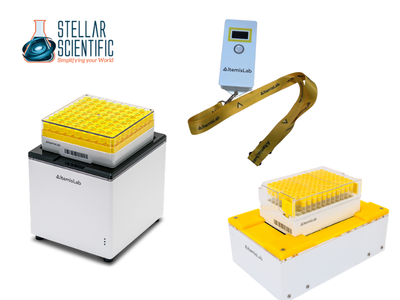
A 2D matrix stores duplicate mathematical representations of the data within its grid. Even if 30% of the physical label is destroyed, a high-quality AlteRead Pendant Single Tube 2D & 1D Barcode Reader for Scanning 2D Barcoded Systems calculates the missing information and outputs a 100% accurate read. Lasers lack the hardware capability to capture these complex two-dimensional grids.
Applying Our Expertise to Exceptional Laboratory Sample Management
As a family-owned business, we've spent the last decade building a reputation for insanely great service, technical expertise, and a carefully curated selection of high-quality lab essentials for the tens of thousands of scientists we serve.
Our mission remains simple: to inspire discovery and keep scientists happy by providing a comprehensive range of lab essentials and general lab equipment that no life science lab can do without, ensuring each product meets our high standards for quality and performance at a fair and competitive price. Backed by a dedicated and exceptional customer support team, Stellar Scientific is a favorite among the scientific community. Our expert team is passionate about science and ready to assist you with any questions you may have.
When tracking critical assays and reagents, exceptional laboratory sample management requires devices that scan, read, and store data from 2D barcoded vials. Researchers cannot afford the disruption of manually typing out lot numbers or dealing with hardware failures.
To address the specific, high-stakes needs of modern laboratories, our curated solutions include:
- Targeted Precision: Barcode readers for scanning single cryovials at a time, perfect for benchtop access and manual verification.
- High-Throughput Efficiency: Barcode readers for scanning large-format or SBS-formatted cryovial racks, capturing data simultaneously in seconds.
- Seamless Software Integration: Barcode readers prepare data to be uploaded as .csv or .xls files, allowing for immediate integration into your LIMS.
- Workflow Automation: Barcode readers can be used alone or integrated with robotic liquid handlers, facilitating automated, walk-away sample processing.
Deploying the right 2D barcode scanners eliminates the bottlenecks associated with damaged labels and legacy technology, ensuring total data integrity.
People Also Ask
Can a 2D imager read traditional 1D barcodes?
Yes. Modern 2D imagers are fully backward compatible. They easily read traditional 1D linear barcodes, as well as complex 2D symbols, postal codes, and optical character recognition (OCR) fonts.
Why is my scanner failing to read tiny barcodes on microcentrifuge tubes?
If your hardware is failing to read very small codes, it is likely an issue with optical resolution. High-density data matrices require a scanner with a high-megapixel sensor and specialized focal lengths to distinguish the tiny modules that make up the code.
What is the difference between a 1D and a 2D barcode?
A 1D barcode stores data horizontally in a series of parallel lines and spaces, holding a limited amount of text. A 2D barcode stores data both horizontally and vertically in a grid pattern, allowing it to hold thousands of characters in a fraction of the space.
Do 2D imagers require a special connection to my computer?
No. Most modern imagers connect via standard USB and utilize USB-HID keyboard emulation. When you scan a vial, the data is instantly typed into whatever spreadsheet, LIMS software, or web browser your cursor is active in.
Elevate Your Lab's Reliability with Stellar Scientific
Stellar Scientific is a trusted partner in the scientific community; we provide the top-tier lab supplies and personalized support you need to drive your research forward with certainty. Our commitment to precision, integrity, and exceptional service ensures you receive the exact solutions required for your lab's success, backed by expertise that goes beyond the transaction.
Stop letting damaged labels and outdated technology slow down your discoveries. Reach out for expert guidance tailored specifically to your workflow, and discover the difference precision hardware can make.