
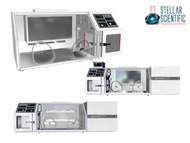
Why BACTRON Anaerobic Chamber Atmosphere Controls are Essential for Strict Anaerobe Cultivation
Posted by Lee Lowenstein on 12th May 2026
BACTRON anaerobic chamber atmosphere controls are essential for strict anaerobe cultivation because they provide a specialized, oxygen-free environment that maintains precise gas ratios and temperature stability. These systems eliminate the risk of oxygen exposure during both incubation and sample manipulation, ensuring the viability of highly sensitive organisms that would otherwise perish in ambient air.
The Critical Role of Oxygen-Free Environments in Microbiology
Cultivating strict anaerobes requires more than just a closed container; it demands a functional ecosystem where atmospheric variables are monitored and adjusted in real-time. Organisms such as Clostridium, Bacteroides, and various methanogens are "obligate" anaerobes, meaning even brief exposure to atmospheric oxygen results in permanent cellular damage. A high-performance anaerobic chamber serves as a specialized glove box that allows researchers to perform every step of their workflow from inoculation to imaging inside a protected environment.
Achieving Stability with the Shel Lab Bactron 300 Anaerobic Chamber
For mid-sized laboratories focusing on clinical diagnostics or specialized research, the Shel Lab Bactron 300 Anaerobic Chamber offers a streamlined solution for high-integrity cultivation. This unit is designed to hold up to 300 Petri dishes, providing an integrated incubator that allows for long-term growth studies without atmospheric fluctuation. The system utilizes a palladium catalyst to remove trace oxygen by reacting it with small amounts of hydrogen to form water vapor, which is then captured by a desiccant.
Scalability and Precision: The Shel Lab Bactron 600 Anaerobic Chamber
Large-scale research facilities or high-volume testing labs often require the expanded capacity of the Shel Lab Bactron 600 Anaerobic Chamber. With room for 600 plates, this system maintains rigorous atmosphere controls while offering more workspace for complex procedures. The benefit of the BACTRON series lies in its ergonomics; unlike traditional rigid-sleeve boxes, its flexible entry system allows the operator to enter the chamber without introducing a large volume of ambient air, significantly reducing gas consumption.
The Stellar Scientific Advantage: Our Commitment to Discovery
At Stellar Scientific, we recognize that the success of your research depends on the reliability of your equipment. Our expert team is passionate about science and ready to assist you with any questions you may have, providing great service and technical expertise to ensure your lab remains operational. We offer a carefully curated selection of high-quality lab essentials designed to inspire discovery and maintain high standards for quality and performance at a fair and competitive price.
Technical Requirements for Strict Anaerobe Survival
To maintain a successful culture, the bactron anaerobic chamber manages four primary factors: oxygen elimination (maintaining levels consistently below 5 ppm), gas composition (balancing $CO_2$ and $H_2$), humidity management to prevent agar dehydration, and temperature uniformity across the entire plate stack. By automating these processes, these units remove the human error factor often associated with manual gas infusions or chemical sachets. This automation is vital for maintaining the "Information Gain" required for reproducible results in modern peer-reviewed research.
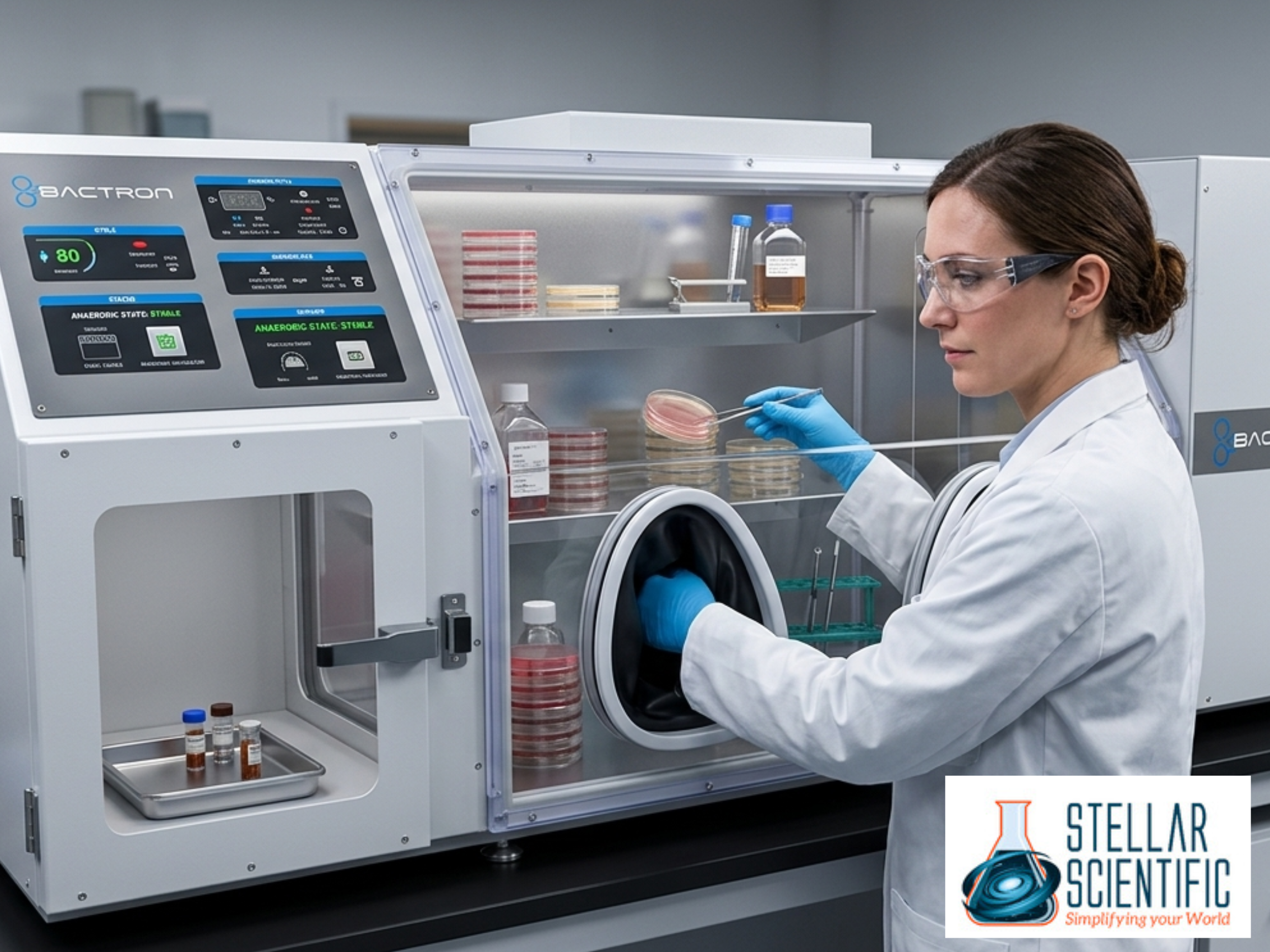
Comparing the Bactron 300 vs. Bactron 600
When selecting a workstation, capacity and footprint are the primary considerations for lab managers.
|
Feature |
Shel Lab Bactron 300 |
Shel Lab Bactron 600 |
|
Petri Dish Capacity |
300 Plates |
600 Plates |
|
Incubator Volume |
5.0 Cubic Feet |
16.0 Cubic Feet |
|
Airlock Volume |
0.5 Cubic Feet |
1.0 Cubic Feet |
|
Best Use Case |
Mid-sized clinical labs |
High-volume diagnostics |
How to Commission Your Anaerobic Chamber
- System Leak Test: Check all gaskets and the airlock door to ensure a gas-tight environment.
- Initial Purge: Flood the chamber with high-purity Nitrogen ($N_2$) to displace ambient air.
- Introduce Mixed Gas: Switch to Anaerobic Mixed Gas (AMG) containing $H_2$ to begin the catalytic "scrubbing."
- Catalyst Activation: Place freshly baked palladium catalyst pellets into the circulation fan housing.
- Equilibration: Allow 8 to 24 hours to reach a steady state before introducing sensitive cultures.
Partnering for Success with Stellar Scientific
Choosing the right equipment is a critical decision for any lab manager. At Stellar Scientific, we bridge the gap between high-end manufacturing and practical laboratory application. Our team understands that you need consistent products to minimize errors and ensure research success.
Explore our atmospheric control solutions:
- Explore all BACTRON Anaerobic Chambers
- View the Bactron 300 Specifications
- View the Bactron 600 Specifications
Whether you are looking for personalized recommendations or are ready to upgrade your facility’s capabilities, we are here to support your needs every step of the way. Contact us today to find the exact solution required to drive your research forward with certainty.
People Also Ask
How long does it take for a BACTRON chamber to become anaerobic?
The initial commissioning typically takes 8 to 24 hours to reach a steady state of zero oxygen. Once established, the airlock allows for the transfer of materials in approximately 60 seconds without compromising the internal environment.
What gas mix is required for a BACTRON system?
The standard Anaerobic Mixed Gas (AMG) is typically 5% Hydrogen ($H_2$), 5% Carbon Dioxide ($CO_2$), and 90% Nitrogen ($N_2$). The hydrogen is necessary for the palladium catalyst to function and remove trace oxygen.
How often should the palladium catalyst be replaced?
The catalyst pellets should be rejuvenated regularly. Most labs bake the catalyst in an oven daily or weekly to remove moisture and adsorbed gases, ensuring peak efficiency in oxygen removal.