

What is the Maximum RCF Difference Between Polypropylene and Polystyrene 15mL Conical Tubes
Posted by Lee Lowenstein on 23rd Apr 2026
The maximum Relative Centrifugal Force (RCF) difference between polypropylene and polystyrene 15mL conical tubes is typically between 8,000 and 10,000 x g. While high-performance polypropylene tubes can often withstand forces up to 12,000–17,000 x g, polystyrene alternatives are generally limited to a maximum of 3,000–6,000 x g due to the brittle nature of the polymer. Selecting the correct material is critical to preventing tube failure, sample loss, and equipment damage during high-speed centrifugation.
Understanding the Material Science of Lab Plasticware
When selecting conical tubes for your laboratory, the choice between polypropylene (PP) and polystyrene (PS) is often dictated by the physical demands of your protocol rather than just the volume of the sample. While both materials offer excellent clarity and graduation visibility, their molecular structures respond very differently to the intense gravitational loads applied during centrifugation.
Polypropylene is a "soft" plastic, characterized by its flexibility and high thermal resistance. This allows it to absorb the stress of high-speed rotations without cracking. In contrast, polystyrene is a "hard," glass-like plastic. While it offers superior optical clarity, making it ideal for pellet observation, it lacks the tensile strength to endure the same RCF levels as its polypropylene counterparts.
RCF vs. RPM: Why the Difference Matters
In the world of 15mL and 50mL conical centrifuge tubes, many researchers mistakenly use RPM (Revolutions Per Minute) as their primary metric. However, RCF (Relative Centrifugal Force) is the only "true" measure of the force being applied to your samples, as it accounts for the radius of the centrifuge rotor.
A 15mL tube rated for 12,000 x g in a fixed-angle rotor may only be rated for a fraction of that in a swinging-bucket rotor due to the different stress points on the conical bottom. Understanding these limits prevents the catastrophic "shattering" effect often seen when polystyrene tubes are pushed beyond their 3,000 x g threshold.
The Stellar Scientific Advantage: Our Core Philosophy
At Stellar Scientific, we believe that providing lab supplies is about more than just moving boxes; it is about supporting the next breakthrough in your research. Our expert team is passionate about science and ready to assist you with any questions you may have. We provide great service and technical expertise through a carefully curated selection of high-quality lab essentials.
Our goal is to inspire discovery by maintaining high standards for quality and performance at a fair and competitive price. We understand that a failed centrifuge run isn't just a lost tube, it is lost time, lost reagents, and potentially a lost milestone. By vetting every product in our catalog, we ensure that when we say a tube can handle a specific RCF, it does so with a margin of safety that gives you peace of mind.
Comparing Durability: Polypropylene vs. Polystyrene
Polypropylene: The High-Speed Workhorse
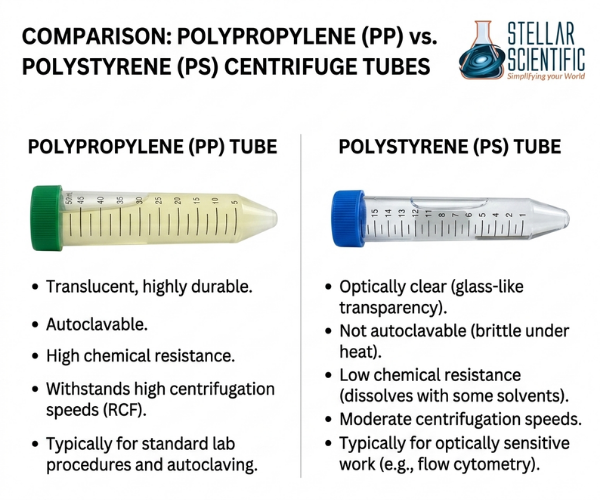
Polypropylene is the industry standard for most molecular biology applications. For example, the 50mL Polypropylene Conical Centrifuge Tubes in Resealable Bag found in our catalog are designed for durability and purity. These tubes are typically:
- Heat Resistant: Capable of being autoclaved.
- Chemically Inert: Resistant to many common lab solvents like phenols and chloroform.
- High RCF Rated: Often exceeding 15,000 x g for 15mL sizes.
Polystyrene: The Optical Precision Specialist
Polystyrene tubes are preferred when sample visibility is the top priority, such as in blood banking or when working with very small pellets. The NEST Scientific 15mL Centrifuge Tube, Polystyrene Reusable Rack provides a sterile, DNase/RNase-free environment with crystal-clear walls. However, users must remain mindful of the lower RCF ceiling to maintain structural integrity during the spin.
Critical Factors Influencing Maximum RCF
Beyond the material itself, several factors dictate how much force a tube can truly handle:
- Rotor Type: Fixed-angle rotors support the walls of the tube more effectively than swinging-bucket rotors.
- Temperature: Cold temperatures (e.g., 4°C) can make plastics more brittle, potentially lowering the effective RCF rating.
- Chemical Compatibility: If you are using harsh chemicals, the plastic may soften, leading to failure even at lower speeds.
- Fill Volume: An under-filled or over-filled tube may collapse or leak under high pressure.
Best Practices for Centrifugation Safety
To ensure your research remains on track, always consult the manufacturer’s specifications for each specific lot of tubes. Not all polypropylene is created equal; thin-walled tubes may have significantly lower ratings than those designed for high-performance use.
Additionally, ensure that the adapters in your centrifuge match the "conical" shape of the tube perfectly. Even the strongest tube will fail if it is rattling in a bucket that is too large, as the force will be concentrated on the tip rather than distributed along the walls.
Why Quality Standards Matter
We recognize that lab managers and researchers prioritize accuracy. Sourcing specialized products should not be a headache. Whether you are looking for the clarity of a NEST Scientific 15mL Centrifuge Tube, Polystyrene Reusable Rack, or the ruggedness of our bulk-packed 50mL options, we back our products with technical data and personalized support.
People Also Ask (FAQ)
Can I centrifuge polystyrene tubes at 10,000 x g?
No, most polystyrene tubes are only rated for 3,000 to 6,000 x g. Attempting to spin them at 10,000 x g will likely cause the tube to crack or shatter, risking your centrifuge and your sample.
Is polypropylene or polystyrene better for cold storage?
Polypropylene is significantly better for cold storage and cryopreservation. It remains stable at temperatures as low as -80°C, whereas polystyrene can become extremely brittle and crack when handled at low temperatures.
How do I convert RPM to RCF for my 15mL tubes?
You can calculate RCF using the formula: RCF = 1.118 x 10^-5 x r x (RPM)^2, where 'r' is the rotating radius in centimeters. Most modern centrifuges have a built-in toggle to switch between these units.
Are all conical tubes DNase/RNase free?
Not necessarily. While high-quality options like our 50mL Polypropylene Conical Centrifuge Tubes in Resealable Bag are certified sterile and DNase/RNase-free, "economy" tubes may not meet these stringent standards. Always check the product specifications.
Drive Your Research Forward with Stellar Scientific
At Stellar Scientific, we understand the unique challenges of navigating complex laboratory requirements. Our brand is built on the belief that precision and integrity are the foundations of scientific progress. We want you to feel confident and reassured, knowing that you have a partner who understands the difference between a routine spin and a critical separation.
What sets us apart is our extensive selection of specialized products paired with a customer-centric approach. Our attention to detail and industry expertise ensure you receive the exact solutions you need, backed by service that goes beyond the transaction.
Are you ready to streamline your workflow and minimize errors with high-quality, consistent supplies? Whether you are looking for specific 15mL and 50mL conical tubes or need personalized recommendations for your next project, we are here to support your needs every step of the way.
Explore our full range of high-performance lab essentials and reach out to our team today for expert guidance tailored to your research goals. Let's drive your discovery forward with certainty. Contact us today!