
What is a 60 mm Petri Dish Typically Used for in a Research Lab?
16th Feb 2026
A 60 mm petri dish is typically used in research labs for small-scale culturing, controlled experiments, pilot studies, and teaching applications where a compact surface area is sufficient. Labs choose this when they want to conserve media, manage limited incubator space, or run multiple parallel tests without committing to larger plates.
This size is especially common in microbiology labs, academic settings, and quality-control environments, where precision, efficiency, and consistency matter more than maximum surface area.
Why Labs Choose a 60 mm Petri Dish
Not every experiment needs a large plate. In fact, many labs intentionally choose smaller petri dishes to improve control and reduce waste.
Smaller Experiments and Limited Sample Sizes
A 60 mm petri dish is ideal when:
- Sample volumes are small
- Reagents are expensive or limited
- The experiment does not require a large growth surface
Because the surface area is smaller, labs can:
- Use less agar or media
- Reduce overall consumable costs
- Maintain tighter experimental control
This makes 60 mm dishes especially popular for pilot studies and early-stage testing before scaling up.
Teaching and Academic Lab Applications
In university and teaching labs, petri dishes are a go-to option because they are
- Easier for students to handle
- More manageable for demonstrations
- Less wasteful during repeated classroom use
Instructors often prefer them for basic culturing exercises, observation labs, and training protocols where clarity matters more than volume.
Space Efficiency in Incubators and Workflows
One of the most common reasons labs choose 60 mm petri dishes is space.
Smaller dishes:
- Stack easily in incubators
- Fit well in crowded lab environments
- Allow more experiments to run simultaneously
This is especially helpful in shared research facilities where incubator space is limited and scheduling matters.
Common Research Areas That Use 60 mm Petri Dishes
Microbiology and Bacterial Cultures
Microbiology labs frequently use this for:
- Routine bacterial growth
- Colony isolation
- Short-term incubation experiments
Because these studies often focus on growth patterns rather than volume, the smaller surface area is more than sufficient.
Cell Culture and Surface-Based Assays
For applications involving adherent cells, labs often select tissue culture-treated 60 mm petri dishes. These dishes are designed to support consistent cell attachment and are commonly used in:
- Surface interaction studies
- Controlled observation experiments
- Early-stage assay development
Choosing the right surface treatment helps ensure reliable results.
Quality Control and Testing Labs
Quality control labs value consistency and repeatability. This product supports:
- Standardized testing protocols
- Predictable growth conditions
- Easy documentation and comparison
For routine checks where results matter more than scale, smaller dishes keep processes efficient.
When a 60 mm Petri Dish Might Not Be the Best Choice
While versatile, these are not ideal for every application.
You may want to consider 100 mm petri dishes if:
- Your experiment requires a larger growth area
- You are running high-throughput comparisons
- Protocols call for extended culture expansion
Larger dishes provide more surface area when scale is essential.
How to Choose the Right 60 mm Petri Dish
Choosing the right dish is not just about size. Small differences in design can affect results.
Material Options and Sterility
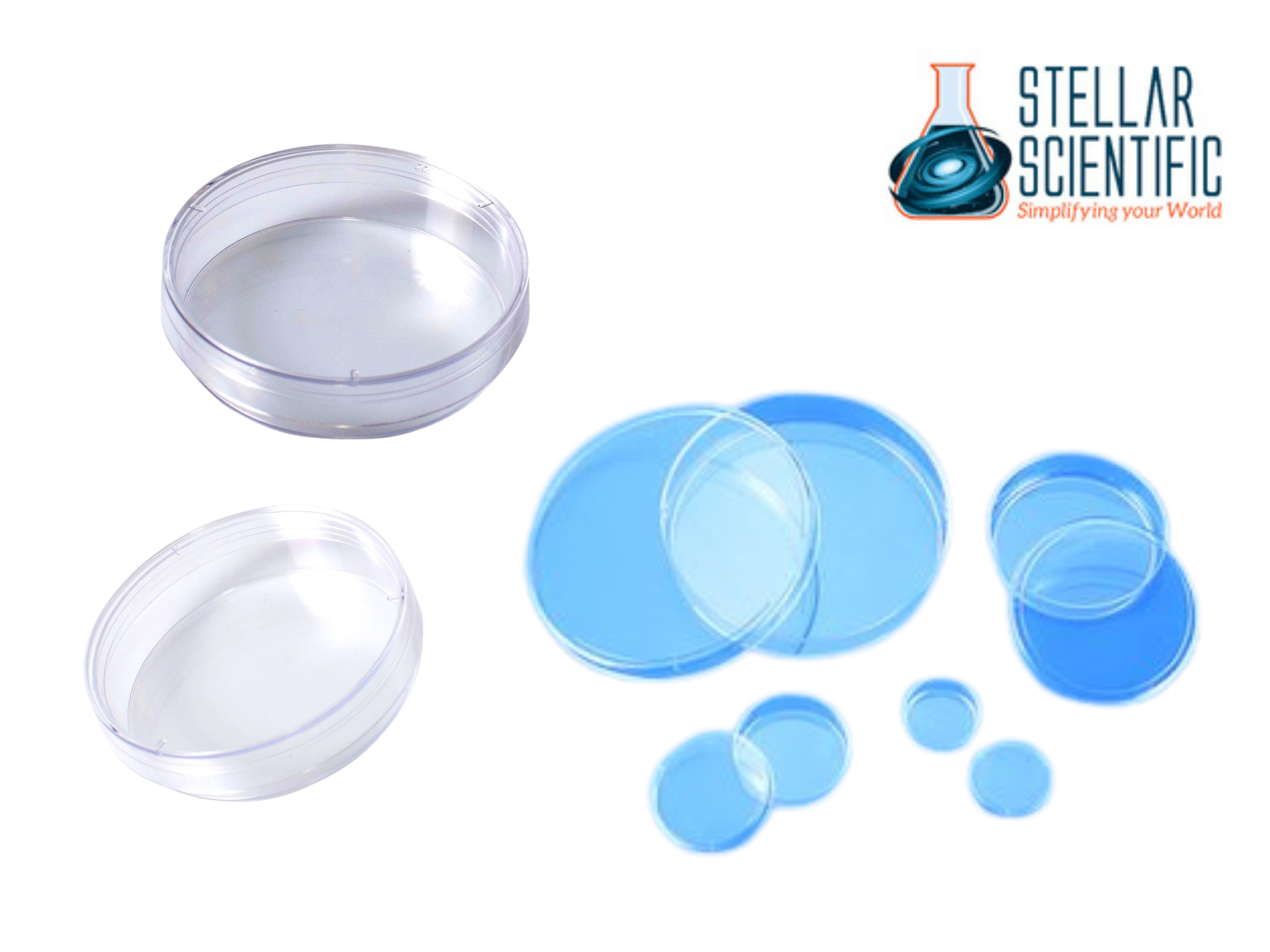
Most 60 mm petri dishes are available in:
- Disposable plastic options
- Reusable glass options
Labs typically select pre-sterilized disposable dishes for convenience and contamination control, especially in high-volume environments.
Vented vs. Non-Vented Lids
The lid design matters more than many people realize.
- Vented lids allow gas exchange and reduce condensation
- Non-vented lids provide a tighter seal for certain protocols
The right choice depends on incubation conditions and experimental needs.
Best Practices for Working With 60 mm Petri Dishes
To get the most out of smaller dishes:
- Use consistent media volumes
- Label clearly to avoid mix-ups
- Stack carefully to maintain airflow
- Store unused sterile dishes properly
These small habits help maintain reliable results over time.
Frequently Asked Questions About 60 mm Petri Dishes
What is the surface area of a 60 mm petri dish?
It has a smaller surface area than a standard 90 mm dish, making it ideal for experiments that do not require extensive growth space.
How much media do you typically use in a 60 mm petri dish?
Most labs use enough media to create an even surface layer without overfilling, allowing proper growth and observation.
Are 60 mm petri dishes good for bacterial cultures?
Yes. They are commonly used for bacterial and yeast cultures where controlled growth and observation are the primary goals.
Can 60 mm petri dishes be stacked in incubators?
Yes. One of their advantages is easy stacking, which helps labs maximize incubator space.
Do teaching labs commonly use 60 mm petri dishes?
Absolutely. Teaching labs frequently use 60 mm dishes because they are easier to manage, cost-effective, and ideal for demonstrations.
Ready to Choose the Right Petri Dishes for Your Lab?
If you are evaluating petri dish sizes or planning upcoming experiments, selecting the right consumables can make daily lab work smoother and more efficient. The right dish size supports better organization, reduced waste, and more consistent results.
About Stellar Scientific
Stellar Scientific is a trusted supplier of scientific research products, tools, supplies, and equipment serving research labs, universities, and biotech companies. Our role is to support the scientific community by providing dependable lab consumables and equipment while helping customers navigate product selection with confidence. We work closely with laboratories to understand workflow needs, space constraints, and purchasing considerations, ensuring they receive reliable products that fit their research environment.
If you are sourcing 60 mm petri dishes or other laboratory supplies, we are here to help you choose the right products for your lab’s specific needs. Ready to get started? Contact us today to request a quote or speak with our knowledgeable team.