
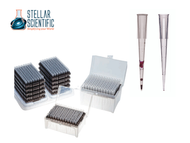
How to Prevent Cross-Contamination When Pipetting High-Viscosity Liquids
27th Mar 2026
To prevent cross-contamination with viscous liquids, use aerosol-resistant filter tips combined with an extended-length design. This prevents liquids from touching the pipette shaft and blocks aerosolized particles from entering the cone. Always use a slow aspiration speed to maintain a steady air cushion and prevent "splash-back" into the pipette barrel.
Precision in the lab is a direct result of the integrity of every microliter you move. When working with high-viscosity reagents, like glycerol, detergents, or thick buffers, the risk of cross-contamination increases because these substances cling to the inner and outer walls of a standard tube tip. This "sticky" residue often leads to carryover that can compromise days of research.
During a recent technical audit for a genomics firm in Cambridge, we observed that even seasoned researchers struggle with "liquid creep" when using inferior consumables. At Stellar Scientific, we’ve spent the last decade building a reputation for technical expertise, ensuring the tens of thousands of scientists we serve have the tools to avoid these exact pitfalls.
The Mechanics of Pipette Contamination
When handling viscous liquids, contamination typically occurs through three distinct pathways. Understanding these is the first step toward total lab biosecurity.
- Aerosol Generation: As a plunger is released, the rapid movement of air can create microscopic droplets. These aerosols stay suspended in the pipette shaft, waiting to contaminate your next sample.
- Liquid "Creep" and Retention: Standard polypropylene often has enough surface energy to "pull" viscous liquids upward. If you are using standard tube tips without low-retention properties, a film of the reagent remains behind, altering the concentration of your next draw.
- Over-Aspiration: Thick liquids move more slowly than air; if a scientist releases the plunger too quickly, the vacuum creates a "slug" of liquid that can shoot past the tube tip and into the pipette cone itself.
Filter Barrier vs. Non-Filter: Protection Levels
Choosing the right consumable is a matter of balancing cost with the "cost of failure." If a single contaminated PCR plate costs you hundreds of dollars in reagents, the investment in high-quality barriers is negligible.
- Aerosol Blockade: Standard non-filter tips offer no protection, while aerosol-resistant filter tips provide up to 99.9% efficiency.
- Over-pipetting Protection: Non-filter tips provide zero protection, whereas filter tips offer high protection with a physical barrier.
- Viscosity Suitability: Non-filter tips are limited to low-viscosity (aqueous) liquids, while filter tips handle high-viscosity substances like glycerol and resins.
- Recommended Use: Non-filter tips are suitable for buffers and aliquoting, while filter tips are recommended for sensitive applications like qPCR and DNA/RNA sequencing.
5-Step Checklist for Flawless, Burr-Free Tipping
To ensure your results remain repeatable, follow this standardized protocol for handling difficult liquids:
- Select the Right Geometry: Use an extended-length tip to create more distance between the liquid and the pipette shaft.
- Calibrate Your Speed: Aspirate and dispense at approximately half the speed you would use for water.
- The "Pre-Wetting" Technique: Pre-wetting the tip with the reagent can improve volume accuracy by creating a uniform film.
- Check for "Teepa Tip™ 1250ul Low-Retention Pipette Tip" Fit: To ensure your tip is seated with enough force to create an airtight seal without cracking the orifice.
- Use Low-Retention Technology: Standardize on tips that utilize a liquid-release formula.
The Biggest Tipping Myth: "Filters Always Protect Your Pipette From Over-Draw"
It is a common industry misconception that any filter will act as a "stop valve" for liquid. In reality, many filters are only designed to stop aerosols; if you over-aspirate a viscous detergent into a lower-tier filter, the liquid can soak through the material and carry contaminants into your pipette barrel. This is why we prioritize the Teepa Tip™ line, where filters are engineered as a robust physical barrier to protect the integrity of the pipette cone.
Applying Stellar Support and Teepa Tip™ Expertise
As a family-owned business, we believe in offering only the highest quality products that directly contribute to advancing scientific progress. Our mission is simple: to inspire discovery and keep scientists happy by providing a comprehensive range of lab essentials and general lab equipment that no life science lab can do without, ensuring each product meets our high standards for performance at a fair price.
When precision and repeatability are important, our Teepa tip™ is a cut above the competition. Made in the USA from high-quality virgin polypropylene and featuring a patented liquid release formula for exceptional volume recovery, you will be pleasantly surprised by their affordability.
We recently helped a diagnostics startup in San Diego transition their high-throughput screening to our specialized consumables. By utilizing our side-by-side dye-test comparison, performed with a multi-channel pipette to ensure no "hand tricks," they saw a 12% improvement in volume consistency across their plates.
Whether you are looking for Teepa Tip™ 10ul XL Extended Length Low-Retention Pipette Tip alternatives or need a specific configuration for your automation, our expert team is ready to assist you. Unlike many suppliers who test one tip at a time to manipulate results, we provide the raw, honest data scientists need to drive their research forward with certainty.
The Teepa Tip™ Advantage: Certified Purity
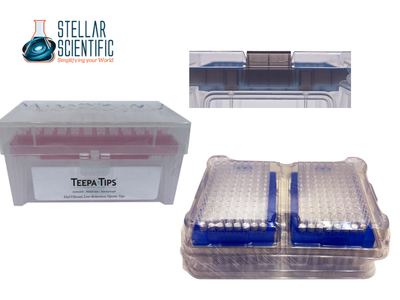
Our products aren't just about the physical shape; they are about chemical purity. All Teepa Tip™ are certified RNase/DNase and human pyrogen free and available as filter (barrier), non-filter, and reload systems.
If you are looking to reduce your lab’s environmental footprint, we highly recommend our reload systems. Just remember, if you wish to purchase the reload Teepa Tip™, you will need to add some empty boxes to your shopping cart to support the tips.
People Also Ask (FAQ)
What is the difference between a filter tip and a low-retention tip?
A filter tip contains a physical barrier to stop aerosols and liquids from entering the pipette. A low-retention tip features a modified surface that prevents liquid from sticking to the plastic. For viscous liquids, a tip that is both filtered and low-retention is recommended.
Can I autoclave Teepa Tips™?
Yes, our non-filtered and reload tips are fully autoclavable. However, we recommend purchasing pre-sterilized filter tips to maintain the integrity of the aerosol barrier.
Why is my pipette leaking when using universal tips?
This is often a "tip-to-cone" compatibility issue. Even universal tips vary in internal diameter, and an airtight seal is vital for the vacuum required to hold viscous liquids.
Partner With Expertise for Your Scientific Success
At Stellar Scientific, we position ourselves as a trusted partner in the scientific community. We want you to feel confident, knowing that with us, you have the reliable products and support needed to drive your research forward.
Ready to see the difference that professional-grade low retention can make? Explore our full range of Teepa Tips™ here and reach out to our team for expert guidance tailored to your lab's specific workflow.