
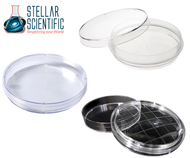
How 100 mm Petri Dish Venting Options Prevent Condensation in Incubation Workflows
Posted by Lee Lowenstein on 5th May 2026
Venting options on a 100 mm petri dish prevent condensation by facilitating consistent gas exchange and thermal equalization between the internal chamber and the external incubator environment. These specialized raised ridges on the lid create a microscopic gap that allows moisture-laden air to escape, ensuring that water droplets do not form on the lid and drip onto agar surfaces. This mechanical design preserves colony integrity and prevents the sample contamination that occurs when moisture falls back onto the media.
The Critical Role of Airflow in Microbiology Workflows
In high-stakes laboratory environments, the success of a culture often hinges on the minute details of the plasticware. When utilizing a 100 mm microbiology petri dish, the primary challenge during the incubation phase is the management of the "micro-climate" inside the dish. As agar is heated, it releases water vapor; without a pathway for this vapor to exit, the moisture hits the cooler lid, condenses into droplets, and falls onto the growth surface.
This cycle is more than just a nuisance; it is a threat to data integrity. Droplets can cause motile bacteria to swarm across the plate, obliterating individual colony morphology and making accurate quantification impossible. By selecting the correct venting configuration, researchers can tailor the rate of evaporation and gas exchange to suit specific aerobic or anaerobic requirements.
Understanding Venting Configurations
Petri dishes are categorized by the number of "vents" or molded spacers located on the underside of the lid. Selecting the right one is essential for optimizing your workflow stability.
Single Vent (One-Point Airflow)
A single vent provides a minimal gap. This is often preferred when a slow rate of gas exchange is required, or when the incubation period is exceptionally long and the researcher needs to prevent the agar from drying out (desiccation).
Triple Vent (The Industry Standard)
The triple-vented dish is the workhorse of the modern lab. Three raised points ensure the lid sits level while providing enough clearance for robust gas exchange. This configuration is highly effective at preventing the "vacuum effect" that can occur during temperature fluctuations, making it easier to remove lids without jarring the samples.
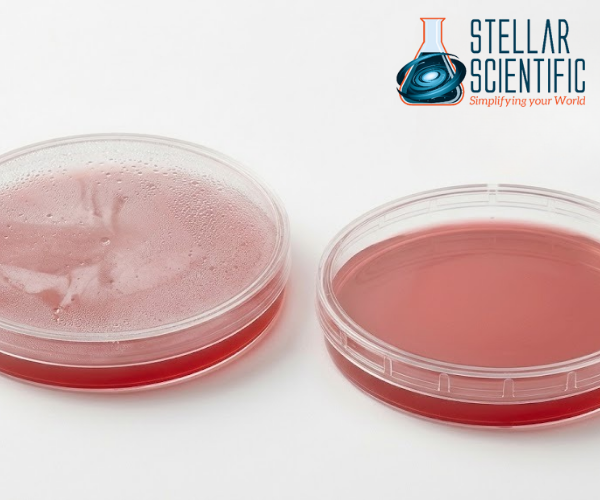
Non-Vented Dishes
Non-vented dishes allow the lid to sit flush against the base. These are typically reserved for anaerobic work or for specialized applications where the dish is sealed with laboratory film. In these cases, the risk of condensation is managed through external environmental controls rather than the dish design itself.
Technical Expertise and High Standards: Our Curation Process
At Stellar Scientific, our expert team is passionate about science and ready to assist you with any questions you may have. We provide more than just supplies; we offer technical expertise through a carefully curated selection of high-quality lab essentials. We understand that a laboratory professional needs tools that perform consistently under pressure to inspire discovery.
Our guiding principles ensure that every product we stock meets high standards for quality and performance at a fair and competitive price. We believe in precision and integrity, which is why we meticulously vet our manufacturers to ensure their plasticware offers the optical clarity and flatness required for modern automated workflows. This commitment to great service means we go beyond the transaction to support your research goals.
Scaling Your Research: From 60 mm to 150 mm
While the standard dish size is the most common for general screenings, workflows often require scaling to different surface areas.
- Small Scale Sensitivity: For high-potency samples or limited incubator space, 60mm Petri Dishes offer a compact solution without sacrificing the venting technology found in larger models.
- Mass Screening: When performing confluent growth studies or large-scale fungal cultures, 150mm Petri Dishes provide the necessary surface area. Just as with the 100 mm versions, these larger dishes require strategic venting to manage the increased volume of water vapor generated by a larger agar surface.
By maintaining consistency in your venting choices across different sizes whether you are using 150mm Petri Dishes for bulk work or smaller options for specialized assays, you ensure that your environmental variables remain constant.
Best Practices for Preventing Incubation Condensation
Beyond selecting the right vented 100 mm petri dish, implementing these workflow adjustments can further minimize moisture issues:
- The Inversion Method: Always incubate plates upside down. This ensures that any residual condensation stays on the lid and does not settle on the agar.
- Equilibration: Allow your agar plates to reach room temperature before placing them in a warm incubator. Placing "cold" plates directly into a 37°C environment creates a temperature gradient that spikes condensation levels.
- Incubator Loading: Avoid overcrowding. Proper spacing between stacks of dishes allows for uniform heat distribution, which prevents localized "cold spots" on lids where moisture is likely to collect.
Conclusion: Confidence in Every Culture
The difference between a successful culture and a contaminated, unreadable plate often comes down to the microscopic gap provided by a vented lid. By understanding the mechanics of airflow, you can take control of your incubation environment and focus on the discovery at hand.
At Stellar Scientific, our goal is to ensure you feel confident and reassured in your supply chain. We know that lab managers and researchers prioritize accuracy above all else. Whether you are navigating the complexities of high-volume screening or fine-tuning a delicate assay, we have the reliable products and support needed to drive your research forward with certainty.
For those ready to optimize their workflows with precision-engineered plasticware, explore our full range of options:
Stellar Scientific is here to support your needs every step of the way. Contact us today for expert guidance or personalized recommendations to find the exact solutions your research requires.
People Also Ask (FAQ)
Why do petri dishes have vents? Vents are molded into the lid to allow for gas exchange and to prevent moisture from condensing on the lid. This airflow is essential for aerobic organisms and helps maintain a consistent internal environment during temperature shifts.
What is the difference between a vented and non-vented petri dish? A vented dish has small ridges that lift the lid slightly off the base, encouraging airflow. A non-vented dish has a lid that sits flush against the base, which is ideal for anaerobic work or when the researcher wants to limit evaporation significantly.
How do I stop condensation on my agar plates? The most effective methods are using vented dishes, incubating the plates upside down (inverted), and ensuring the plates are at room temperature before they are placed into the incubator.