

Efficient Benchtop Storage: How to Organize Tools for Quick Access During Experiments
1st Dec 2025
In research labs, efficiency is everything. A slow workflow can delay experiments, disrupt timelines, and even lead to errors. One area where these delays often creep in is at the benchtop. If tools and supplies are hard to find or difficult to access, every experiment takes longer. Benchtop storage plays a critical role in reducing this wasted time by keeping tools organized and easily accessible.
At Stellar Scientific, we understand that research labs, universities, and biotech companies all face these challenges. While we don’t conduct experiments ourselves, we work closely with labs to ensure they have the right equipment, tools, and storage solutions. In this article, we’ll address three key questions to help you organize your benchtop for maximum efficiency:
Storage Options for Organization and Quick Access
When setting up your benchtop storage, the primary goal is to balance organization with quick access. This means creating a layout where tools are easily reachable without creating a cluttered, chaotic workspace.
What Does “Organization Plus Quick Access” Really Mean?
Efficient benchtop storage means more than just putting things away; it’s about making sure tools and supplies are both organized (so you know exactly where everything is) and accessible (so you can grab them quickly without wasting time). According to industry benchmarks, a well-organized bench can reduce time spent searching for tools by up to 30%.
When you design your benchtop layout, think about:
- Visibility: Can you see everything clearly? Transparent bins or open trays let you see your tools and supplies instantly, helping with fast retrieval. You can find a variety of options in our Benchtop lab storage category.
- Designated spaces: Every tool should have a designated “home” on your benchtop or shelving. This keeps items from getting lost or buried under other supplies.
- Ergonomics: Tools should be stored in positions that allow for quick grabs without stretching or bending awkwardly.
What Types of Benchtop Storage Work Best for Quick Access?
Several types of storage strike a balance between organization and easy access:
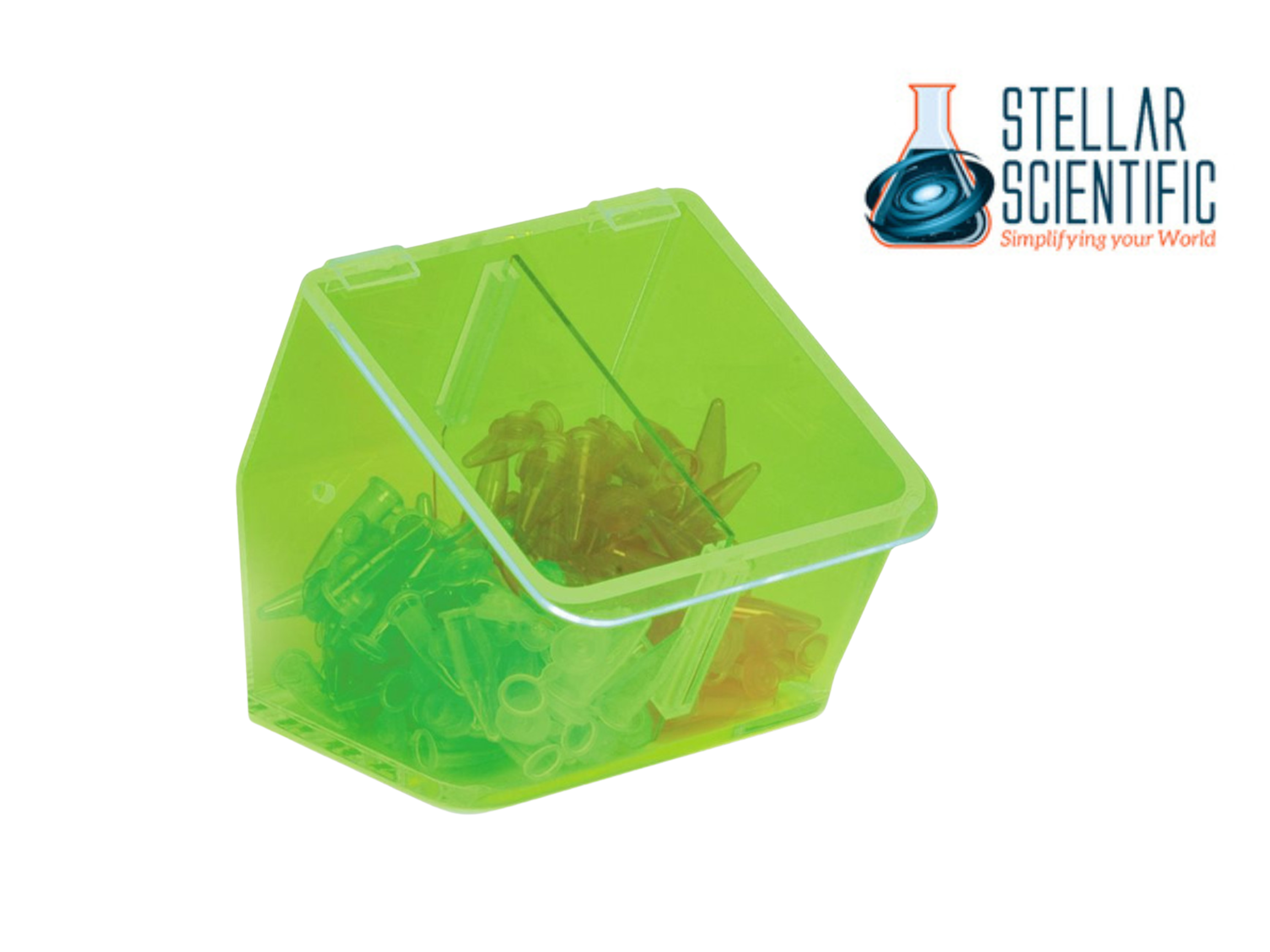
- Open dispensing bins: These are great for smaller tools (e.g., pipette tips, gloves) that need to be accessed quickly. Their front-facing, angled openings make it easy to grab. The Three-Compartment Benchtop Dispensing Bin is an excellent example of this type.
- Tiered risers or shelving: These systems help store supplies above the benchtop, keeping your workspace clear. They are perfect for organizing tools while still allowing quick access.
- Modular drawers: These are versatile and can be used for tools or consumables that don’t need to be accessed constantly but should still be easily reachable when needed.
The best option for you depends on your specific needs, such as how frequently the tools are used and how quickly you need access to them. For instance, frequently used tools should be placed within immediate reach, while rarely used tools can be stored in drawers or on higher shelves.
How to Choose the Right Storage Based on Your Workflow
A good storage solution depends on how often you use your tools and how much space you have on your benchtop. Here’s a quick decision framework:
- If the tool is used daily, keep it on the benchtop in an easily accessible spot. Open bins or trays work well here.
- If the tool is used less frequently, consider placing it in a drawer or on a higher shelf. This will free up the space on your bench while keeping the tool within arm’s reach when needed.
- If the tool is bulky or requires a larger footprint, use tiered shelving or modular drawers that can hold large instruments without crowding the bench surface.
Choosing the Right Benchtop Storage for Delicate Laboratory Instruments
Delicate instruments such as pipettes, glassware, and precision tools require extra care when stored. A poorly chosen storage solution can result in damage, contamination, or loss of accuracy in your work.
Key Considerations for Delicate Instruments
For fragile or precision tools, benchtop storage should offer protection, visibility, and accessibility:
- Protection: Use cushioned storage or anti-vibration trays to prevent damage from impacts. This is especially important for instruments such as spectrophotometers and microscopes.
- Visibility: Clear, open containers help you see whether a tool is in its designated spot and in good condition.
- Accessibility: Tools should be within easy reach, but not in a position where they could get knocked over by someone passing by.
Material and Build Quality
Choosing the right storage materials is just as important as the layout. For delicate instruments, look for storage options made of:
- Chemical-resistant plastics or acrylics that are durable and easy to clean.
- Non-slip bases to prevent containers from shifting or tipping over.
- Padded trays or covers for glassware and fragile equipment.
Make sure your storage solution is robust enough to support the weight and size of the instruments without compromising their safety. A well-designed storage system will protect these valuable tools while ensuring they're easy to retrieve when needed.
Matching Storage to Instrument Type
Different instruments require different types of storage:
- Pipettes: Use pipette stands or holders that keep them upright and easily accessible.
- Glassware: Shallow, padded trays or stackable racks are ideal for storing slides or petri dishes.
- Electronics: Sensitive electronics like meters or probes should be stored on padded shelves with cable management features to keep cords untangled and instruments protected.
Space-Saving Ideas for Benchtop Storage in Small Research Labs
Space is often at a premium in smaller research labs. However, there are several strategies you can use to maximize your benchtop storage without sacrificing accessibility or efficiency.
Maximizing Vertical Space
In smaller labs, vertical storage can make a huge difference. Instead of cramming everything onto your benchtop, consider:
- Tiered risers: These keep your tools organized while freeing up valuable flat surface area. By stacking tools vertically, you can access everything quickly while leaving your bench clear for experiments.
- Wall-mounted shelves: These can hold additional supplies or tools above the workspace, keeping them within easy reach but off the bench itself.
Zoning Your Benchtop
Dividing your benchtop into designated zones can help you create more organized, functional storage:
- Front zone: Tools and supplies you use most frequently should be placed in the front of the bench, so they’re within immediate reach.
- Middle zone: Items you need less frequently can go here, while consumables like gloves and wipes should be within arm’s reach.
- Back zone: Keep larger items, overflow supplies, or anything used rarely in the back section of your bench or on a shelf.
By organizing your tools and supplies to mirror your workflow, you’ll save time and reduce the risk of misplacing items.
Modular Storage Solutions
Modular storage systems are another great option for small labs. These systems allow you to configure your storage to fit your specific needs and adjust it over time. Look for stackable bins, drawer units, or shelving systems that can be added to as your needs change. This flexibility ensures that your storage solution can grow with your lab.
Troubleshooting Common Benchtop Storage Challenges
Even the best storage systems can face challenges. Here are some common issues and solutions:
- Problem: Tools still get misplaced despite having storage.
Solution: Enforce a “return after use” policy and label all storage bins and areas clearly to remind users where each tool belongs. - Problem: Your bench gets crowded with overflow supplies.
Solution: Store backup supplies on shelves or in cabinets, leaving only the tools needed for current tasks on the benchtop. - Problem: Delicate instruments are still getting knocked over or damaged.
Solution: Invest in padded or anti-vibration storage and ensure instruments are stored away from high-traffic areas.
What You Can Skip & Cost Considerations
While there are many high-end storage systems available, you don’t always need to go for the most expensive option. For most labs, basic organizers, bins, and risers will provide significant improvements. The key is to prioritize accessibility and visibility while choosing solutions that fit your budget.
If your lab space is tight, focus on modular storage solutions, which can be rearranged as needed. These typically offer the best balance of functionality and cost.
Next Steps & How Stellar Scientific Can Help
Start by auditing your benchtop. Take stock of the tools and supplies you use most frequently, and consider your available space. If you need help selecting the right storage solution for your lab, Stellar Scientific offers a range of benchtop organisers tailored to fit your workflow.
To Sum Up
Efficient benchtop storage is crucial to a streamlined, productive lab environment. By choosing storage options that offer both organization and quick access, selecting the right solutions for delicate instruments, and utilizing space-saving strategies, you can improve workflow and reduce time spent searching for tools. Ready to improve your benchtop workflow? Contact us today for a consultation to optimize your lab's storage and a quote for our storage solutions!