
The Complete Guide to Cardboard Freezer Boxes for Laboratory Sample Storage
9th Jan 2026
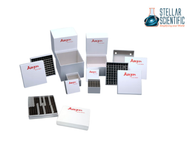
A cardboard freezer box is a specialized storage container designed to organize biological samples in ultra-low temperature freezers. These boxes are made from corrugated cardboard treated with a wax coating or lamination to withstand extreme cold, including temperatures down to -80°C, such as in freezers and liquid nitrogen storage.
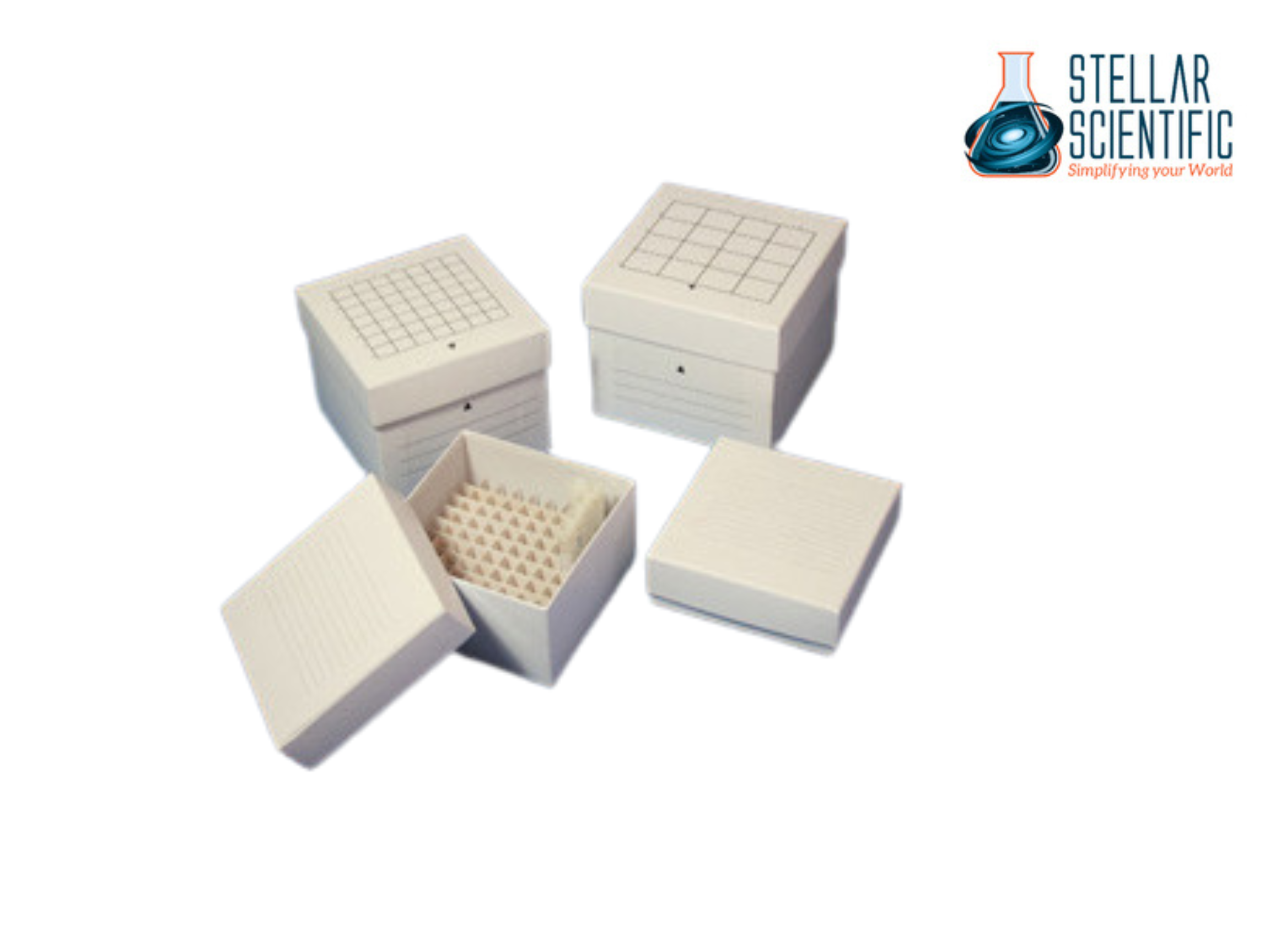
They feature individual compartments (typically 81-place or 100-place configurations) that hold cryovials and microcentrifuge tubes. The compartments keep everything organized and prevent tubes from shifting during storage and retrieval. For labs handling blood samples, DNA, RNA, or tissue specimens, proper storage and organization are essential to maintain sample integrity.
Stellar Scientific offers high-quality cardboard freezer boxes with weep-holes for liquid nitrogen compatibility and internal numbered grids for quick sample retrieval.
Can I use regular cardboard boxes, or do I need special freezer-rated ones?
You absolutely need freezer-rated cardboard boxes. Regular cardboard lacks the protective coating necessary to resist moisture condensation in freezers. When regular cardboard gets wet, it collapses, potentially destroying valuable samples.
Freezer-rated boxes are coated with wax or laminated materials that repel moisture and maintain shape through repeated freeze-thaw cycles. They include drainage holes for liquid nitrogen, divider systems that operate at extreme temperatures, and materials that do not crack at -80°C.
How do I organize samples to avoid mix-ups?
Use boxes with numbered grids printed inside each well. These numbers (typically 9x9 or 10x10) assign a unique identifier to each sample position. Log both the box identifier and grid position (like “Box A, Position C-7”) in your LIMS or spreadsheet.
Even better are boxes with attached hinged lids that have matching numbered grids on top. This prevents accidental rotation of a separate lid, which would misalign the grid with the actual sample positions.
The Bulls-Eye Box™ with hinged grid lid features a numbered grid on the lid that perfectly matches the interior, preventing loss of track of sample positions.
Are cardboard freezer boxes better than plastic ones for -80°C storage?
Both work for -80°C storage, but cardboard offers key advantages. The corrugated layers naturally trap air, providing insulation that helps maintain stable internal temperatures. This is valuable during sample retrieval when boxes are temporarily removed from the freezer; the insulation slows temperature increases, giving you more time to select samples.
Cardboard is also significantly lighter and more cost-effective. When managing hundreds of sample boxes, this matters for handling and budget. Plastic boxes are more durable for very long-term storage but lack cardboard’s insulation and cost considerably more.
For most research applications, cardboard provides a better balance of insulation, cost-effectiveness, and functionality, and it’s recyclable.
New Developments: Recyclable & Biodegradable Cardboard Freezer Boxes
A newer innovation within the cardboard freezer box category is the introduction of recyclable and biodegradable options, such as those from PulpFixin. These boxes are grouped under their own category within Stellar Scientific’s cardboard boxes lineup and are designed for labs looking to reduce waste without changing their storage workflows.
Unlike traditional wax-coated cardboard, Pulp Fixin boxes are made from recyclable paper pulp with a moisture-resistant coating that enables reliable performance in freezer environments while remaining easier to recycle at end of life. They are available in standard cryovial configurations, making them a practical drop-in alternative for labs pursuing sustainability goals or green lab initiatives.
As sustainability becomes a higher priority across research institutions, biodegradable freezer boxes represent a meaningful advancement, offering the familiarity of cardboard storage with a reduced environmental footprint.
Can cardboard freezer boxes be used in liquid nitrogen storage?
Yes, but only boxes designed for liquid nitrogen (LN2) with proper drainage features. Look for weep holes, small drainage openings in the bottom. When submerged in liquid nitrogen, the liquid seeps into the interior of the box. Without drainage holes, trapped LN2 rapidly evaporates at room temperature, creating pressure that can damage the box or pop tubes out.
Weep holes allow liquid nitrogen to drain freely. All of Stellar Scientific’s freezer boxes, including the Bulls-Eye Box™ series, feature drainage slots for both LN2 storage systems and -80°C ULT freezers.
What sample tube sizes fit in standard cardboard freezer boxes?
Most 2-inch-tall freezer boxes comfortably hold 1.5-2.0mL microcentrifuge tubes and standard cryovials, accommodating tube diameters of approximately 10-12mm. This covers the majority of sample storage needs in molecular biology, genomics, and clinical research labs.
For larger tubes, such as 15mL or 50mL conicals, you need specialized boxes with fewer compartments. For specialized applications, Stellar Scientific offers freezer boxes for 50mL tubes with 16-place configurations and 3-inch tall Big-Flip boxes for 4mL cryovials.
What’s the most cost-effective way to buy freezer boxes?
Purchase in bulk cases rather than small quantities. Cardboard freezer boxes are typically sold in packs of 5 or cases of 48–96 boxes. The per-box cost drops significantly with full cases, sometimes by 30–40% compared with buying multiple small packs.
Look for suppliers that include dividers at no extra cost. Some vendors charge separately for dividers, doubling your effective box cost. Consider total cost of ownership: mid-priced boxes from reputable suppliers often deliver the best value over time due to their durability and feature set.
Stellar Scientific offers case quantities of 96 boxes with dividers always included, featuring numbered interiors and weep holes.
Why choose cardboard over plastic for sustainability?
Cardboard is biodegradable and recyclable through standard paper recycling streams. Traditional cardboard freezer boxes already reduce plastic waste, while newer biodegradable options, such as molded pulp freezer boxes, go a step further by eliminating coatings that can complicate recycling.
Cardboard production, especially from recycled or renewable fiber sources, requires less energy and generates fewer carbon emissions than plastic manufacturing. For institutions with sustainability commitments or green lab certification programs, choosing cardboard freezer boxes represents a practical way to reduce environmental impact without sacrificing performance.
Ready to Organize Your Lab’s Sample Storage?
At Stellar Scientific, we understand that proper sample organization is critical to research success. Whether you need standard 2-inch boxes, Bulls-Eye Boxes with hinged lids, freezer boxes for 50mL tubes, or are exploring more sustainable cardboard options, we have solutions to support your lab.
Contact us today to discuss your sample storage requirements.