

How Do You Choose a Microplate Shaker That Keeps Samples Stable and Ensures Reliable Results?
5th Dec 2025
If you’ve ever dealt with inconsistent microplate data, you know how frustrating it can be. The culprit is often the shaker itself, the way it moves, the speed it maintains, or how well it holds your plates in place. The right microplate shaker can make all the difference between steady, reliable results and unpredictable data.
At Stellar Scientific, we’ve helped many labs upgrade from inconsistent, older shakers to precision-controlled models, and they’ve seen instant improvements in reproducibility. So, what should you look for when choosing one? Let’s break it down question by question.
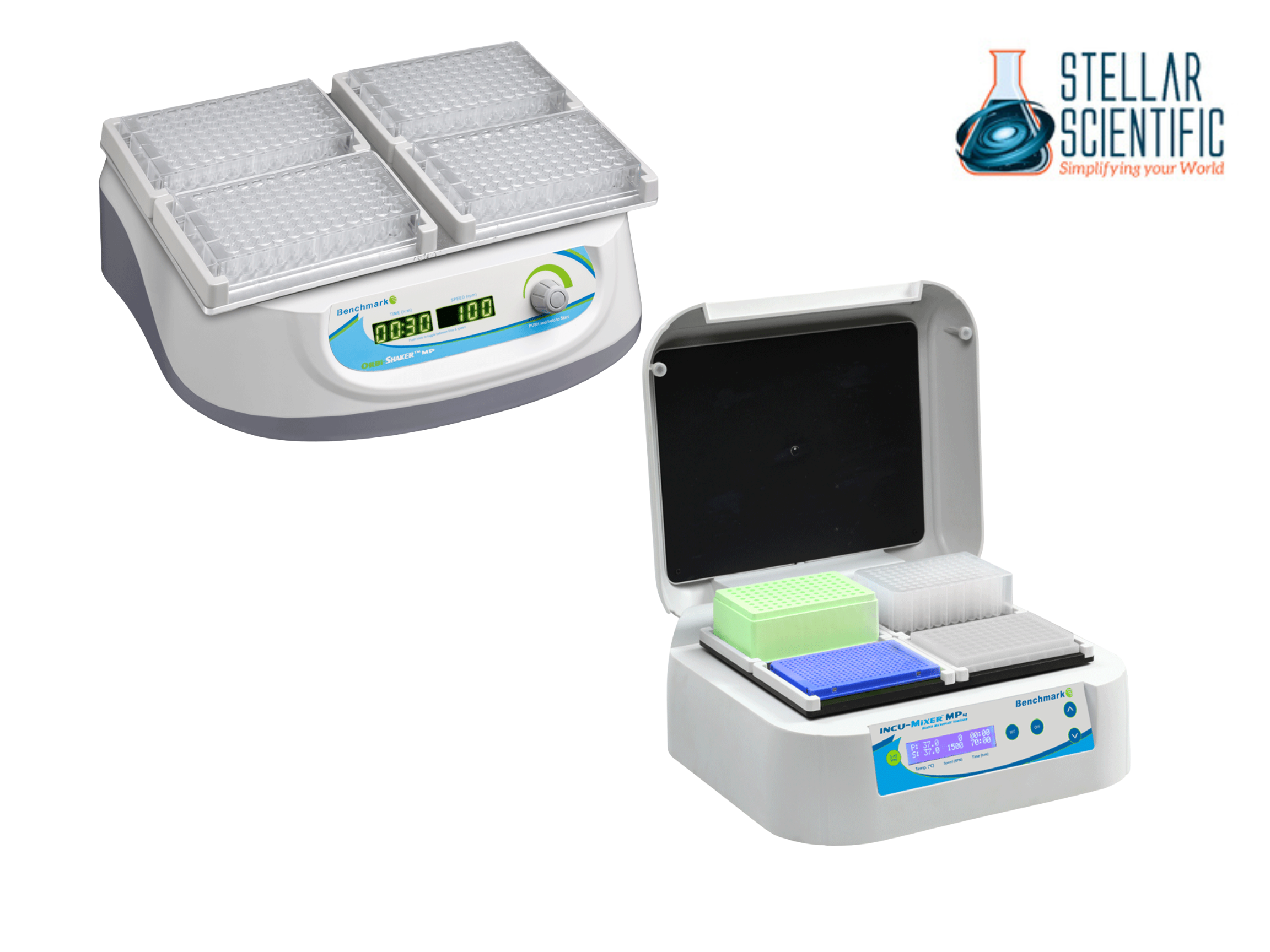
What Makes a Microplate Shaker Reliable for Consistent Mixing?
A reliable microplate shaker should move smoothly and evenly, creating uniform agitation across all wells. Consistency in motion means consistency in data.
Smooth, controlled orbital motion keeps reagents evenly distributed, reducing edge effects and preventing bubbles. Look for a model with a sturdy, balanced platform because any vibration or wobble can cause uneven results.
Speed control is another major factor. Most microplate shakers operate at speeds ranging from 100 to 1200 RPM. You want a shaker that maintains its speed steadily, rather than fluctuating during the run. Precision motors and digital controls are worth paying for because they ensure reliability.
Finally, consider splashing and spillage. A high-quality shaker utilizes secure clamps, anti-slip mats, and soft-start and soft-stop features to protect your samples and maintain a calm liquid surface.
What Size or Capacity Microplate Shaker Should You Get If You Run Multiple Plates?
The best shaker size depends on your plate type and how much you typically run at once.
If you’re only shaking one or two 96-well plates, a small benchtop model will suffice. But if you run high-throughput assays or multiple 384-well plates, a larger, multi-plate unit or stackable system is worth considering.
Smaller models fit easily inside biosafety cabinets or incubators, while larger ones integrate with automated systems.
Whatever your setup, avoid overloading the platform. Running a shaker near its maximum capacity can strain the motor and lead to uneven motion. Staying within 80 to 90 percent of capacity helps maintain stability and extend the shaker’s lifespan.
Why Do Some Microplate Shakers Cause Uneven Mixing Across Wells?
Uneven mixing can stem from three main causes: balance, settings, and design.
If your plates aren’t evenly distributed on the platform, you’ll get irregular motion. Always balance the load before starting a run.
Speed and orbit size also matter. A small orbit provides gentle mixing that’s ideal for microplates, while larger orbits are better for flasks or deeper wells. Using the wrong speed and orbit combination can make liquids pool or stick unevenly in wells.
Lastly, poor build quality or lack of calibration can lead to inconsistent movement. That’s why many labs trust Stellar Scientific’s tested microplate mixer options. They’re built for precision and designed to maintain accuracy over years of use.
Can You Share a Real Example of How a Better Shaker Improved Results?
One research team was running ELISA assays and struggling with inconsistent absorbance readings. After ruling out pipetting and reagent errors, they discovered the issue was with their older, unbalanced shaker.
Once they replaced it with a precision-controlled microplate incubator shaker, their results stabilized almost immediately. Mixing became more uniform, and reproducibility improved across all plates. A minor equipment adjustment made a significant difference in their data confidence.
What Features Should You Look for When Buying a Microplate Shaker?
Here’s a quick checklist for choosing a dependable, lab-grade plate shakers model:
- Smooth, quiet operation with minimal vibration
- Programmable settings for speed and time
- Compatibility with different plate formats (96-well, 384-well, deep-well)
- Easy-to-clean platform and durable construction
- Reliable motor and strong warranty support
These features make the difference between a shaker that “just works” and one that truly supports your lab’s accuracy and efficiency.
How Can You Keep Your Microplate Shaker Performing at Its Best?
Even the best shaker needs regular attention. To keep it reliable:
- Balance plates evenly before every run
- Calibrate speed settings on a regular schedule
- Avoid using maximum speed continuously
- Inspect clamps, mats, and seals for wear
- Use proper sealing films or lids to reduce evaporation and splashing
Following these habits ensures long-term consistency and helps protect your investment.
Final Thoughts: Choosing the Right Microplate Shaker for Reliable Results
A dependable microplate shaker from Stellar Scientific is one of the simplest ways to protect your data quality. By focusing on stability, precise motion, and the right capacity for your workflow, you can eliminate many common causes of variability.
If you’re ready to upgrade or need guidance on selecting the best model for your lab, please contact us today. Our team can help you find the perfect shaker for your workflow, ensuring your results remain as reliable as your science.