
How Are Non-Tissue Culture Treated Plates Different From Tissue Culture Treated Plates?
28th Feb 2026
Non-TC plates differ from TC plates primarily in how their surfaces interact with cells. Tissue culture-treated plates are manufactured with a modified surface that encourages cells to attach and spread, whereas non-tissue culture-treated plates have a neutral surface that does not promote adhesion. Because of this difference, each plate type is suited for very different lab applications.
If you are deciding which plate type to use, understanding these core surface differences will help you choose the right plates for your workflow.
Surface Treatment Differences Explained
Although these plates may look similar at first glance, their surface chemistry is what truly sets them apart.
Tissue Culture Treated Plates
Tissue culture-treated plates are manufactured to enhance cell attachment and spreading. They are commonly used when working with adherent cells that must attach to the plastic surface to grow and form monolayers.
These treated surfaces are ideal for:
- Growing adherent cell lines
- Long-term culture studies
- Experiments where cell morphology and surface attachment matter
Because they undergo surface modification, these plates typically cost more than untreated options.
Non-Tissue Culture Treated Plates
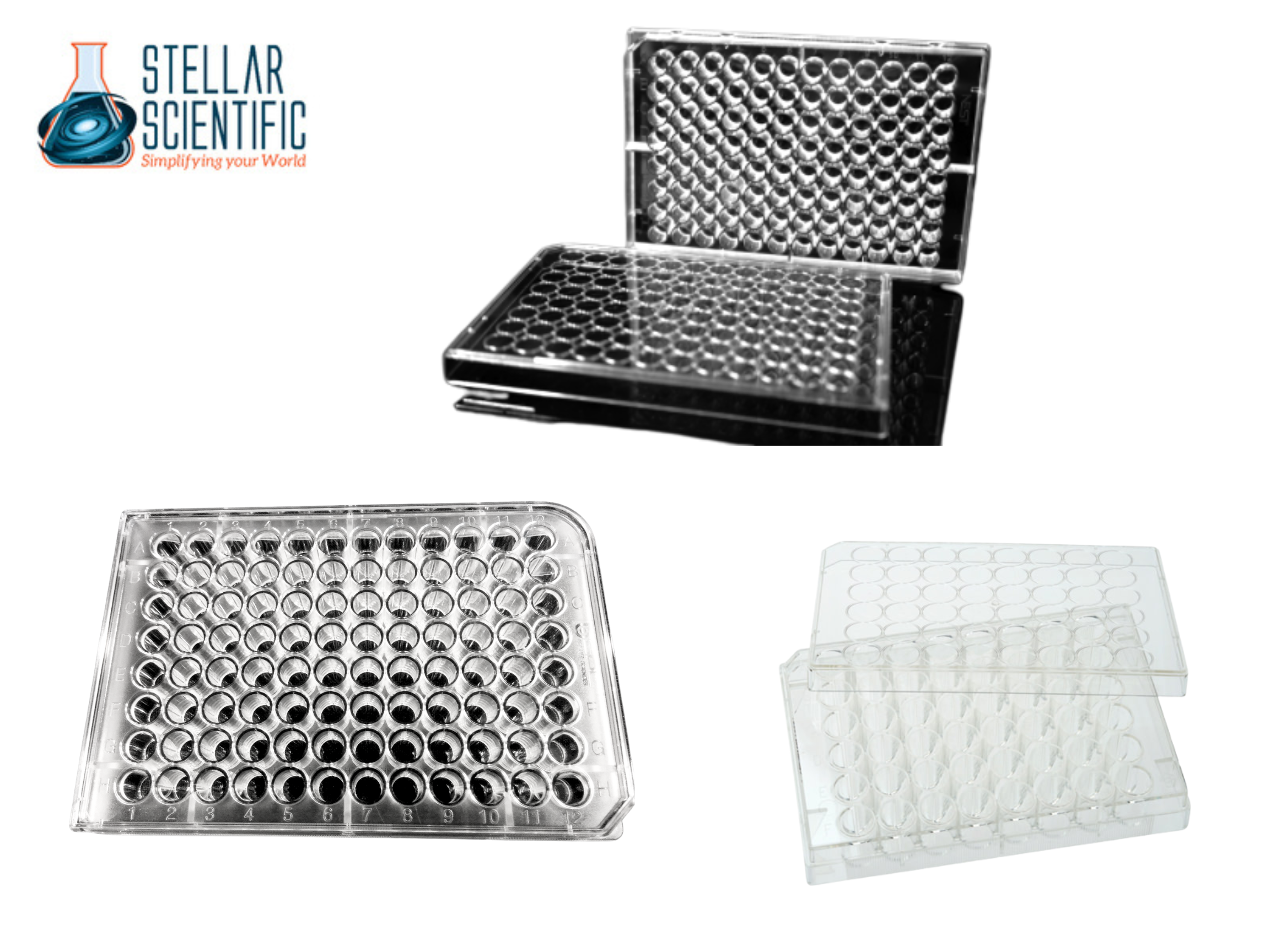
Non-tissue culture treated multi-well plates are manufactured without surface modification, leaving the plastic surface neutral. This neutral surface discourages cell adhesion, making these plates well-suited for workflows where attachment is not desired.
These plates are commonly used for:
- Suspension cell cultures
- Microbiology and bacterial growth
- Assay preparation
- Sample holding and reagent mixing
Because they do not include specialized surface treatment, these plates are generally more cost-effective for workflows that do not require adhesion.
How These Differences Affect Lab Applications
Understanding how surface treatment influences cell behavior helps avoid costly mistakes.
Cell Attachment and Growth
The most notable distinction between treated and non-treated plates is how cells interact with the surface:
- Tissue culture-treated plates promote cell attachment and spreading
- Non-tissue culture-treated plates discourage adhesion and help maintain suspension cultures
Using the wrong plate type can lead to inconsistent results, compromised cell health, or unpredictable experimental outcomes.
Cost and Practical Considerations
From a purchasing perspective, plate selection directly affects cost control and workflow efficiency.
Non-TC-treated plates are typically:
- Less expensive because they do not include surface modification
- Suitable for a wide range of general lab tasks
- A practical choice when cell adhesion is not required
For example, 24-well polystyrene non-treated plates and 6-well non-treated plates provide convenient formats for suspension cultures and general laboratory use.
Common Mistakes Labs Make When Choosing Plate Types
Even experienced labs can make selection errors.
Common issues include:
- Ordering tissue culture-treated plates when surface attachment is not required
- Confusing surface requirements for suspension versus adherent cells
- Not accounting for cost differences between plate types
Clarifying workflow needs before ordering helps prevent these problems.
How to Decide Which Plate Type Is Right for Your Lab
Before placing an order, consider the following questions:
- Do cells need to adhere to the plate surface?
- Is the application focused on suspension or adherent cell culture?
- Will the plates be used for assays, microbiology, or sample preparation?
- Does the protocol require long-term cell attachment?
Answering these questions will help determine whether tissue culture-treated or non-treated plates are the better fit.
A Real-Life Lab Example
A research facility initially ordered only TC-treated plates because it assumed they were suitable for all applications. When technicians ran suspension-based assays, cells behaved unpredictably due to unintended partial adhesion to the treated surface.
After switching to non-TC-treated plates, assay results became more consistent, workflows improved, and overall plate costs were reduced.
Teaching and Research Lab Considerations
Non-tissue culture-treated plates are widely used in teaching labs because they provide a versatile and budget-friendly option for experiments that do not require adherent cell growth.
Research labs also benefit from maintaining both treated and non-treated plates, ensuring the correct plate type is available for each application.
Best Practices for Plate Selection
To avoid errors and wasted supplies:
- Match plate surface type to application requirements
- Avoid purchasing treated plates when adhesion is unnecessary
- Clearly label treated and non-treated plate inventory
- Review experimental protocols before ordering
These best practices help labs reduce waste and improve workflow consistency.
Frequently Asked Questions About Plate Surface Treatment
What is the main difference between tissue culture-treated and non-treated plates?
The main difference is surface chemistry. This product promotes cell attachment, while non-treated plates discourage adhesion.
Can non-tissue culture-treated plates be used for bacterial cultures?
Yes. These are commonly used for microbiology and bacterial growth applications.
Are non-tissue culture-treated plates suitable for suspension cells?
Yes. They are often preferred for suspension cell cultures because they help prevent unintended adhesion.
Are tissue culture-treated plates more expensive?
Yes. It typically costs more due to the additional surface modification process.
Can both plate types be useful in a single lab?
Absolutely. Many labs keep both treated and untreated plates on hand, depending on the application.
Ready to Choose the Right Plates for Your Lab?
Selecting the correct plate surface can improve results, reduce waste, and simplify ordering. Understanding when to use non-tissue versus tissue culture-treated plates helps labs make more confident purchasing decisions.
Explore non-tissue culture-treated multi-well plates to find options that fit your specific workflows.
About Stellar Scientific
Stellar Scientific is a trusted supplier of scientific research products, tools, supplies, and equipment for research labs, universities, biotech companies, and quality-control environments. We support lab professionals by offering reliable consumables from non-tissue culture-treated plates to tissue culture-treated options, along with practical guidance to help customers select the right products for their workflows.
Are you sourcing multi-well plates or other laboratory essentials and ready for a free quote? Contact us today to speak with our knowledgeable team and get help finding the products that meet your lab’s needs.