
A Simple Guide to Understanding SDS and COA Documents Before You Buy Lab Chemicals
15th Dec 2025
When purchasing laboratory chemicals, two documents commonly used in the buying process are the Safety Data Sheet (SDS) and the Certificate of Analysis (COA). These documents provide information about safety, handling, purity, and testing methods. Although not all SDS or COA files are posted online, they can often be requested from the manufacturer when needed. Understanding their general purpose can help buyers know what to expect before placing an order.
Chemical Grades: A Basic Overview
Chemical products are available in different grades, such as ACS, Reagent, Analytical, and HPLC. These grades indicate broad purity expectations and are selected depending on the intended use. Some laboratory tasks, like standard buffer preparation, may involve products commonly found in Chemical Buffers categories. More specialized or high-purity applications may involve solvent products from companies such as Birch Bio Solvents.
Buyers often compare purity ranges, impurity limits, packaging, and storage instructions when determining which chemical grade best meets their needs.
What an SDS Typically Includes
An SDS is a standardized document that usually follows the GHS 16-section format. It provides information about hazards, recommended storage and handling practices, PPE considerations, and transport classifications. Reviewing an SDS helps determine whether a facility can safely store and manage a product.
If a document appears outdated or inconsistent, buyers may request an updated SDS from the manufacturer or the supplier.
What a COA Typically Includes
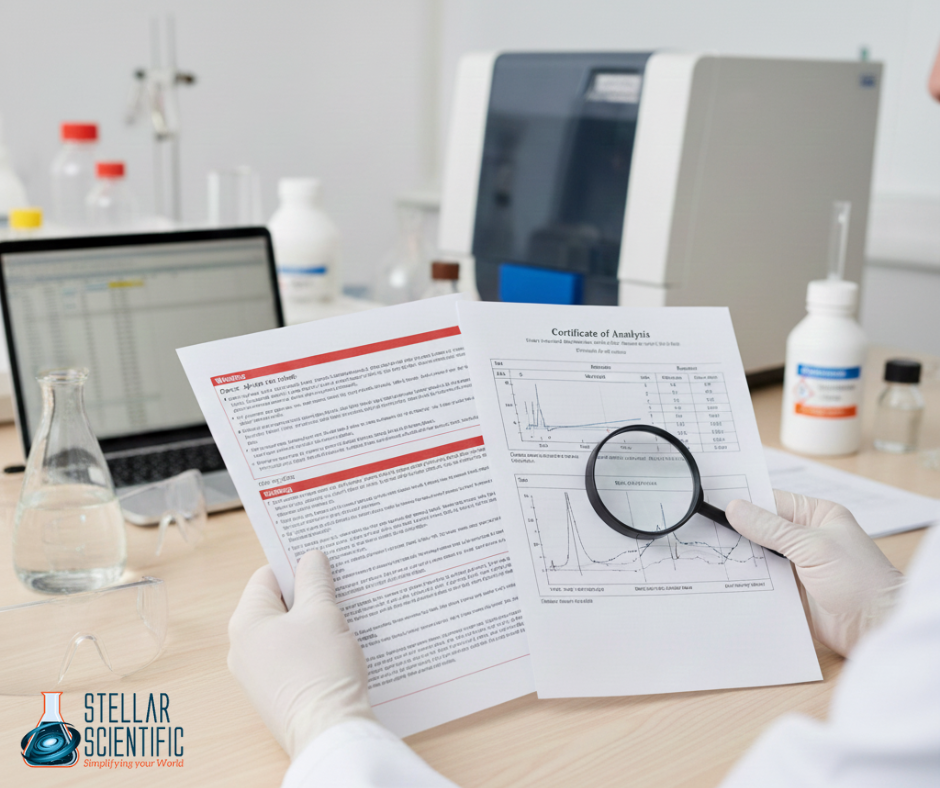
A COA provides lot-specific information, including purity results, analytical methods, and testing dates. Some COAs accompany shipments, while others must be requested. Buyers usually confirm that the lot number on the COA matches the number on the product label. Lot-specific documentation can be particularly important in product groups such as ChemPure Chemicals, where specifications may vary by lot.
If details such as numerical values, test descriptions, or dates are missing, clarification is often requested before the product is used.
What to Check When Orders Arrive
Chemical shipments frequently come directly from manufacturers. Buyers often inspect packaging to ensure the bottle and label are intact and confirm that documentation matches the delivered lot. This step is common whether the order was placed through general categories like Laboratory Chemicals or through a specific manufacturer section.
Business Address Shipping Requirements
Many chemical manufacturers require deliveries to a qualified business address. Residential delivery is typically restricted, and orders may be delayed until a suitable business address is provided. This requirement ensures compliance with carrier and manufacturer shipping policies.
Confirming Materials Before Use
Before a chemical is placed into service, laboratories often check that the SDS and COA information meet their internal expectations or facility requirements. If something appears unclear or inconsistent, updated documentation is usually requested before the material is approved for use.
When Extensive Documentation May Not Be Necessary
Not all research environments require extensive documentation. Some laboratories may operate without needing raw-material traceability, ultra-high-purity chemicals, or extended shelf-life records, depending on the nature of their work and whether regulatory oversight applies. Each facility determines what is necessary for its own workflow.
A Basic Review Process
A general approach many buyers follow includes identifying workflow needs, selecting a suitable grade, reviewing SDS safety information, requesting a COA when needed, confirming that the product can be stored safely, and checking the shipment for accuracy upon arrival.
About Stellar Scientific
Stellar Scientific is a supplier of laboratory chemicals and scientific materials. The company does not conduct research but provides access to products used in research settings. For many chemical products, SDS or COA documents may not appear on the website by default. When needed, these documents can be requested and obtained from the manufacturer.
If you require SDS or COA files for a product or need help locating available documentation, contact us.